---
title: [CASE STUDY] Azul saved 1.5M liters of fuel by optimizing arrival procedures| OpenAirlines
description: Discover how Azul saved 1.5 million liters of jet fuel by optimizing ATC procedures and flight charts at VCP, using SkyBreathe® Custom Flight Indicators.
image: https://blog.openairlines.com/hubfs/Blog-illustration/Header_case_study_Azul_CFI.jpg
---
[](https://www.openairlines.com/)
- [Home](https://www.openairlines.com/)
- 360° eco-flying platform
- [SkyBreathe® Analytics – Fuel management software](https://www.openairlines.com/fuel-management-software/)
- [+ Emissions Report module](https://www.openairlines.com/fuel-management-software/report-co2-emissions/)
- [+ Advanced Trajectory module](https://www.openairlines.com/fuel-management-software/advanced-trajectory-module/)
- [SkyBreathe® MyFuelCoach – Pilot engagement app](https://www.openairlines.com/pilot-engagement-app/)
- [SkyBreathe® OnBoard – Real-time eco-flying app](https://www.openairlines.com/real-time-eco-flying-app/)
- [SkyBreathe® APM – Aircraft Performance Monitoring](https://www.openairlines.com/aircraft-performance-monitoring/)
- [SkyBreathe® OTP – On-time performance analysis](https://www.openairlines.com/on-time-performance-analysis/)
- Use Cases
- [SkyBreathe For CEO/CFO](https://www.openairlines.com/for-ceo-cfo/)
- [SkyBreathe For Head of Flights Ops & Chief Pilot](https://www.openairlines.com/for-head-of-flights-ops-chief-pilot/)
- [SkyBreathe For Pilots](https://www.openairlines.com/for-pilots/)
- [SkyBreathe For Fuel Managers & Ops Engineers](https://www.openairlines.com/for-fuel-managers-ops-engineers/)
- [Customers Stories](https://www.openairlines.com/customers/)
- Resources
- [Blog](https://blog.openairlines.com/)
- [White Papers](https://blog.openairlines.com/tag/white-paper)
- [Case Studies](https://blog.openairlines.com/tag/case-studies)
- [Webinars on fuel efficiency](https://blog.openairlines.com/tag/upcoming-webinars)
- [Upcoming Tradeshows](https://blog.openairlines.com/tag/tradeshow)
- [OpenAirlines Academy](https://academy.openairlines.com/?utm_campaign=23545222-Academy&utm_source=FuelEfficiencyBlog)
- Company
- [OpenAirlines Mission](https://www.openairlines.com/our-company/)
- [News](https://blog.openairlines.com/news)
- [Career - We are Hiring!](https://www.welcometothejungle.com/fr/companies/openairlines)
- [Sustainability Report](https://www.openairlines.com/sustainability-report/)
- [OpenDay](https://info.openairlines.com/openday2026)
- [Contact](https://www.openairlines.com/contact/)
[](https://cta-redirect.hubspot.com/cta/redirect/4233951/5390e83d-eea4-4183-83a3-0f26b0324d37)
##### Blog
- [Latest articles](https://blog.openairlines.com)
- [Fuel Efficiency](https://blog.openairlines.com/tag/fuel-efficiency)
- [Airline Experience](https://blog.openairlines.com/tag/airline-experience)
- [Sustainability](https://blog.openairlines.com/tag/environment)
- [Technology](https://blog.openairlines.com/tag/technology)
- [News](https://blog.openairlines.com/news)
[Back to Blog](https://blog.openairlines.com)
# \[CASE STUDY\] Azul saved 1.5M liters of fuel by optimizing arrival procedures
Published by [Isabella](https://blog.openairlines.com/author/isabella) on Sep 9, 2026, 4:37:55 PM
Fuel efficiency is an industry-wide transformation and Azul Linhas Aéreas Brasileiras took that transformation into the airspace itself. Through Project Viracopos, the team compared planned and actual flight paths at their main hub, then worked with Brazil's air navigation authority to change the procedures. The result: 1.5 million liters of jet fuel saved in 2025.
[](https://blog.openairlines.com/hs/cta/wi/redirect?encryptedPayload=AVxigLJvyiQmDpAKq2%2FKfsLpcMDkaJnaDSVO1V0VplpDmuV6lexX9QXtu%2F2dM17lPXS7x08vGBhdHUEI3V%2Fcth2R%2FJE3wsajTleV%2FhKE%2BXhmm1Vhz55nWtAYxdBQFpiG%2Fr21De5zbdYQp3ShlS%2BmIe%2B%2Fs4SB6IKupMCYoJetBlKdeN9JyerLISNkKTfedSZ2u4OAcfXz9vvEDcsQsBsufNe4BnN9c8x%2BCLCvvUkOP3VbOx0SPStbVBQj0NF9p%2F4%3D&webInteractiveContentId=221360532238&portalId=4233951)
## About Azul Linhas Aéreas Brasileiras
|  | 900+ flights per day | 158 destinations across Brazil and the world | 186 operating aircraft: | Cessna Caravans, ATR 72-600s, Embraer 195 E1/E2, ERJ-190s, Airbus A320, A321neos, A330ceos. |
| --- | --- | --- | --- | --- |
The purpose of the project at Viracopos Airport
Project Viracopos set out to increase efficiency in flight trajectories at Azul's main hub, with two initiatives: modifying STAR (arrival) and SID (departure) procedures, and reducing flight time and ground distance, to lower fuel consumption and CO2 emissions.
[](https://blog.openairlines.com/hs/cta/wi/redirect?encryptedPayload=AVxigLJvyiQmDpAKq2%2FKfsLpcMDkaJnaDSVO1V0VplpDmuV6lexX9QXtu%2F2dM17lPXS7x08vGBhdHUEI3V%2Fcth2R%2FJE3wsajTleV%2FhKE%2BXhmm1Vhz55nWtAYxdBQFpiG%2Fr21De5zbdYQp3ShlS%2BmIe%2B%2Fs4SB6IKupMCYoJetBlKdeN9JyerLISNkKTfedSZ2u4OAcfXz9vvEDcsQsBsufNe4BnN9c8x%2BCLCvvUkOP3VbOx0SPStbVBQj0NF9p%2F4%3D&webInteractiveContentId=221360532238&portalId=4233951)
> ## "By optimizing how aircraft arrive and depart within the TMA, we could improve overall air traffic flow and reduce unnecessary track miles."
>
> Juliana Paes dos Santos
> Fuel Efficiency Engineering Coordinator at Azul
---
Finding the gap between the charts and the flights
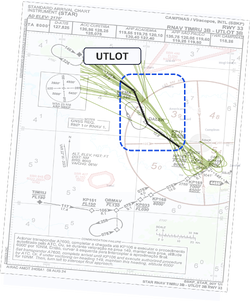
Azul's team started by overlaying actual flight paths on the published chart with SkyBreathe® Map. What they found was a high rate of ATC clearances diverging from it. In reality, pilots were flying a different path than the chart described.
That gap became the starting point: why not change the chart to match what pilots were actually flying?
From there, the team analyzed ATC clearances, level adherence, and planned versus executed trajectories in depth, building the evidence they needed to bring to DECEA and propose procedural changes.
The changes, and what they delivered
- **UTLOT STAR**: one of Azul's most used arrival routes, with an average fuel burn of 127 kg before the redesign. After 12 modifications to arrival and departure charts, the average weighted fuel burn dropped to 70 kg, affecting roughly 3,700 flights a month and saving over 200,000 liters of fuel.
- **EDMUS STAR**: flight distance cut from 135.3 NM to 95.8 NM, a reduction of 39.5 NM.
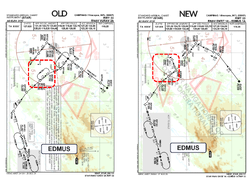
- **ENTIT STAR**: The new ENTIT STAR burns 31.88 kg less fuel on average than the previous one, is roughly 6 NM shorter, and is 83 seconds faster per flight.
> ## "After the redesign, the new average weighted fuel burn was around 70 kilos, which is a drastic reduction from what we had before. To reach this, we made around 12 modifications in total."
>
> Juliana Paes dos Santos, Fuel Efficiency Coordinator at Azul
Results across 2025
- ⛽ **1.5 million liters of jet fuel saved** from January to December.
- ⏱️ **1 minute less per operation** on average, across 9,000 flights analyzed.
- 🛬 **55 hours less** in monthly departure time, **100 hours less** in monthly arrival time at VCP.
[](https://blog.openairlines.com/hs/cta/wi/redirect?encryptedPayload=AVxigLJvyiQmDpAKq2%2FKfsLpcMDkaJnaDSVO1V0VplpDmuV6lexX9QXtu%2F2dM17lPXS7x08vGBhdHUEI3V%2Fcth2R%2FJE3wsajTleV%2FhKE%2BXhmm1Vhz55nWtAYxdBQFpiG%2Fr21De5zbdYQp3ShlS%2BmIe%2B%2Fs4SB6IKupMCYoJetBlKdeN9JyerLISNkKTfedSZ2u4OAcfXz9vvEDcsQsBsufNe4BnN9c8x%2BCLCvvUkOP3VbOx0SPStbVBQj0NF9p%2F4%3D&webInteractiveContentId=221360532238&portalId=4233951)
What's next
Azul is extending the same data-driven approach to TMA Belo Horizonte in 2026 and TMA Rio de Janeiro in 2027, using SkyBreathe® to build the same evidence base and building on the confidence Project Viracopos gave the team.
---
No time to read? ▶️ Watch the webinar replay
[](https://blog.openairlines.com/hs/cta/wi/redirect?encryptedPayload=AVxigLKnOmH4o3nx%2BhlC9QaHEkq9k2oyJkJhwxm5MmQxDxjo75luyfoWnhpCLNnuH2sZw2i3SAILBTurv9lUP6E4C7qcXEebbw1XhYMxp%2BaMHQRUWy%2BXHRvht7NefHZOZr%2F27QRnYK19LAUeUfkO2zqIhOyP7pAFR%2FaFXRME4c%2Fu194yCJW7%2FztEfmkLjmZPG8rtAMhTLJiNb2VPJipXtwxgI4G7YVRi3DCWStCYbJTr1xN%2Bc9VlzjCYu0Tkw2I%3D&webInteractiveContentId=213624345366&portalId=4233951)

Tags: [Case Studies](https://blog.openairlines.com/tag/case-studies), [Airline Experience](https://blog.openairlines.com/tag/airline-experience)
[Back to Blog](https://blog.openairlines.com)
[](http://www.facebook.com/share.php?u=https://blog.openairlines.com/case-study-project-viracopos-azul-saved-1-5m-liters-of-fuel-by-rethinking-arrival-procedures&utm_medium=social&utm_source=facebook) [](https://twitter.com/intent/tweet?original_referer=https://blog.openairlines.com/case-study-project-viracopos-azul-saved-1-5m-liters-of-fuel-by-rethinking-arrival-procedures&utm_medium=social&utm_source=twitter&url=https://blog.openairlines.com/case-study-project-viracopos-azul-saved-1-5m-liters-of-fuel-by-rethinking-arrival-procedures&utm_medium=social&utm_source=twitter&source=tweetbutton&text=) [](http://www.instagram.com/share.php?u=https://blog.openairlines.com/case-study-project-viracopos-azul-saved-1-5m-liters-of-fuel-by-rethinking-arrival-procedures&utm_medium=social&utm_source=instagram) [](http://www.linkedin.com/shareArticle?mini=true&url=https://blog.openairlines.com/case-study-project-viracopos-azul-saved-1-5m-liters-of-fuel-by-rethinking-arrival-procedures&utm_medium=social&utm_source=linkedin) [](https://web.whatsapp.com)
## Related Articles
## [\[Video\] How Transavia France reduces CO2 emissions with SkyBreathe®](https://blog.openairlines.com/how-transavia-reduces-co2-emissions-with-skybreathe)
Transavia France, the low-cost airline of the AIR FRANCE KLM Group, operates scheduled and charter...
[Read More](https://blog.openairlines.com/how-transavia-reduces-co2-emissions-with-skybreathe)
## [Advanced fuel efficiency: what to do if standard metrics don't fit for your operations?](https://blog.openairlines.com/advanced-fuel-efficiency-custom-flight-indicators)
Every airline collects flight data. But not every airline operates the same way. Your procedures,...
[Read More](https://blog.openairlines.com/advanced-fuel-efficiency-custom-flight-indicators)
## [\[Webinar\] How Azul Saved 1.5M Liters of Jet Fuel by optimizing ATC and Charts at VCP](https://blog.openairlines.com/webinar-azul-saved-1.5m-liters-jet-fuel)
Want to discover how Azul saved 1.5 million liters of jet fuel at Viracopos International Airport...
[Read More](https://blog.openairlines.com/webinar-azul-saved-1.5m-liters-jet-fuel)
[](https://www.openairlines.com/)
EUROPE - HEADQUARTERS
31, rue Alsace Lorraine – 31000 Toulouse, France
ASIA
10 Floor, Guangdong Investement Tower
148 Connaught Road Central, Hong Kong
AMERICAS
c/o Jade Fiducial 990 Biscayne Blvd Office
701 Miami, FL33132 USA
- SkyBreathe® Platform
- [SkyBreathe® Analytics – Fuel management software](https://www.openairlines.com/fuel-management-software/)
- [SkyBreathe® MyFuelCoach – Pilot engagement app](https://www.openairlines.com/pilot-engagement-app/)
- [SkyBreathe® OnBoard – Real-time eco-flying app](https://www.openairlines.com/real-time-eco-flying-app/)
- [SkyBreathe® APM – Aircraft Performance Monitoring](https://www.openairlines.com/aircraft-performance-monitoring/)
- [SkyBreathe® OTP – On-time performance analysis](https://www.openairlines.com/on-time-performance-analysis/)
- Use Cases
- [SkyBreathe® For CEO/CFO](https://www.openairlines.com/for-ceo-cfo/)
- [SkyBreathe® For Head of Flights Ops & Chief Pilot](https://www.openairlines.com/for-head-of-flights-ops-chief-pilot/)
- [For Fuel Managers & Operations Engineers](https://www.openairlines.com/for-fuel-managers-ops-engineers/)
- [SkyBreathe® For Pilots](https://www.openairlines.com/for-pilots/)
- [Customers Stories](https://www.openairlines.com/customers/)
- [Our Company](https://www.openairlines.com/our-company/)
- [Sustainability Report](https://www.openairlines.com/sustainability-report/)
- [Career](https://www.welcometothejungle.com/fr/companies/openairlines)
- [Contact](https://www.openairlines.com/contact/)
- Resources
- [Blog](https://blog.openairlines.com/)
- [White papers](https://blog.openairlines.com/tag/white-paper)
- [Case Studies](https://blog.openairlines.com/tag/case-studies)
- EVENTS
- [OpenDay](https://info.openairlines.com/openday)
- [Upcoming Webinars](https://blog.openairlines.com/tag/upcoming-webinars)
- [Upcoming Trade Shows](https://blog.openairlines.com/tag/tradeshow)
### © Openairlines 2023 - All Rights Reserved
- [Privacy Policy](https://www.openairlines.com/privacy-policy/)
- [Cookies Policy](https://www.openairlines.com/cookies-policy/)
- [Site Map](https://www.openairlines.com/site-map/)
```json
{
"@context" : "https://schema.org",
"@type" : "BlogPosting",
"author" : {
"@type" : "Person",
"name" : "Isabella",
"url" : "https://blog.openairlines.com/author/isabella"
},
"dateModified" : "2026-09-09T14:37:55.950Z",
"datePublished" : "2026-09-09T14:37:55.000Z",
"headline" : "[CASE STUDY] Azul saved 1.5M liters of fuel by optimizing arrival procedures",
"image" : [ "https://blog.openairlines.com/hubfs/Blog-illustration/Header_case_study_Azul_CFI.jpg" ],
"mainEntityOfPage" : {
"@id" : "https://blog.openairlines.com/case-study-project-viracopos-azul-saved-1-5m-liters-of-fuel-by-rethinking-arrival-procedures",
"@type" : "WebPage"
},
"publisher" : {
"@type" : "Organization",
"logo" : {
"@type" : "ImageObject",
"url" : "https://blog.openairlines.com/hubfs/Blog-illustration/Logo.png"
},
"name" : "Nextops OpenAirlines"
}
}
```